What to Eat During Menopause? Protein, Fibre, and Calcium Habits
By:Author:Harmony Diet Editorial
Updated on:October 17, 2026
- A Full Day of Eating Built Around the Basics
- How Much Protein, Fibre and Calcium Actually Counts
- Small Food Swaps Beat a Full Diet Overhaul
- Making These Habits Work on an Ordinary Week
- Adjusting These Habits to Where You Are Now
- When These Eating Habits Start to Feel Normal
- Letting Harmony Diet Shape Your Menopause Meals
- Carrying These Habits Into Your Next Shop
The short answer: build meals around protein, fibre and calcium-rich foods, spread fairly evenly across the day, and let everything else sit around that frame.
This works because your body handles muscle, bone and appetite signals a bit differently during menopause, and these three groups directly support all three.
This guide covers what a day can look like, how much of each to aim for, why small swaps beat strict plans, and how to fit it into a real week.
A Full Day of Eating Built Around the Basics
There's no single correct menu, but seeing one laid out helps turn the idea into something you can copy tonight.
A Sample Day
- Breakfast - Greek yoghurt with berries and a spoon of ground flaxseed
- Lunch - Lentil and vegetable soup with a slice of wholegrain bread
- Snack - A handful of almonds and a piece of fruit
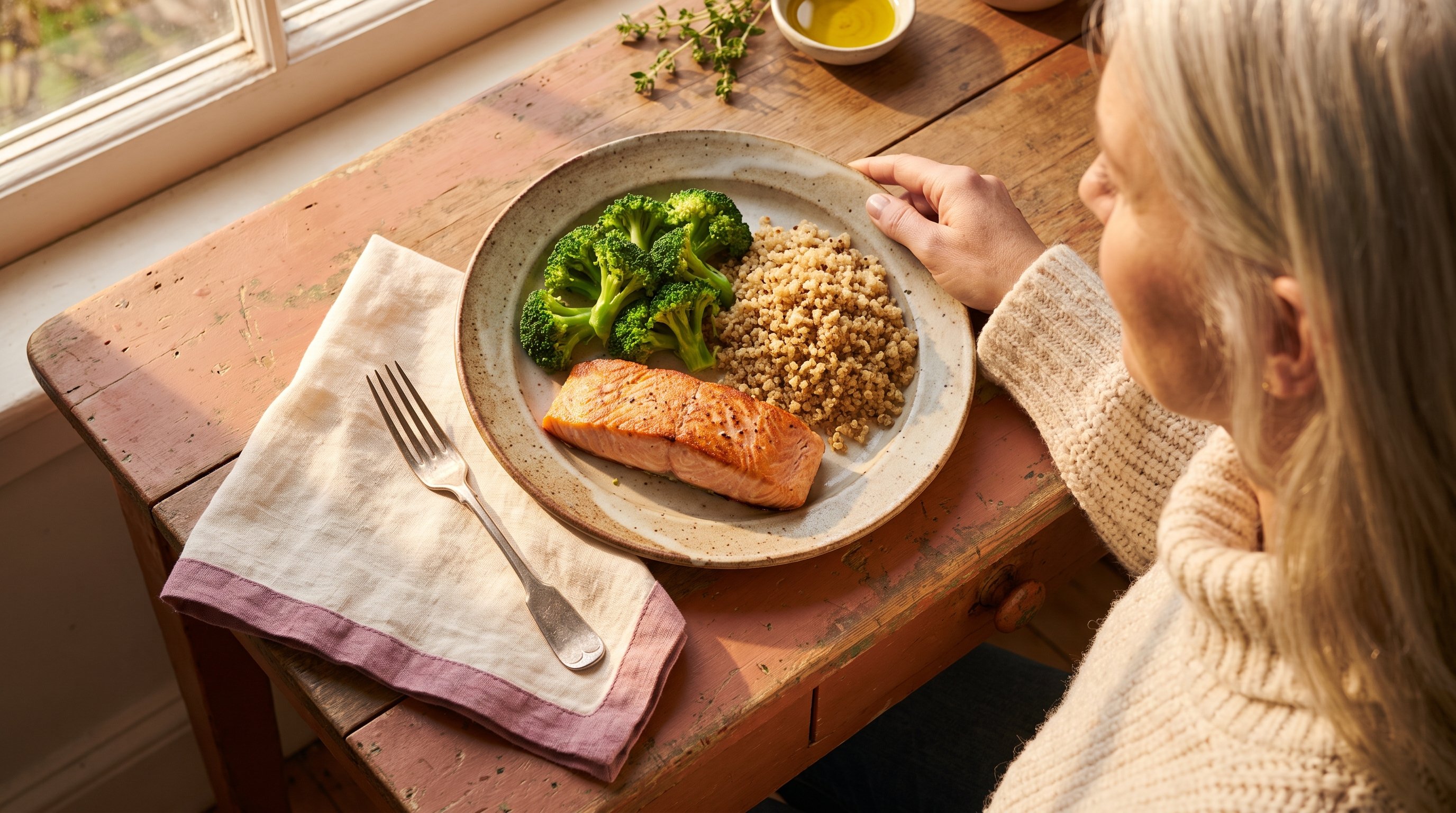
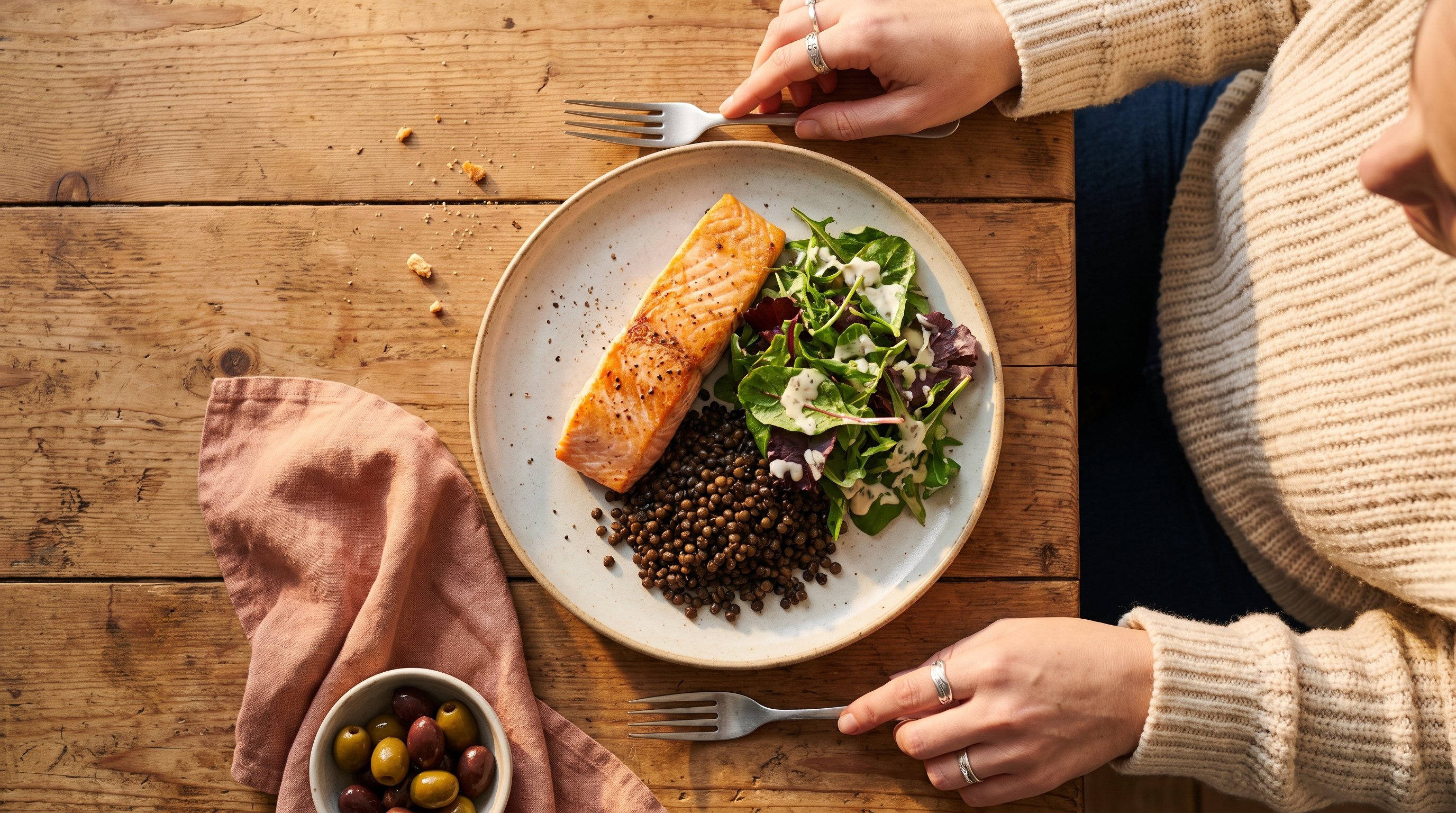
- Dinner - Grilled salmon, steamed broccoli and a small baked potato
- Evening - A small portion of cottage cheese if hunger shows up
Notice the pattern: protein shows up at every meal, fibre comes from vegetables, legumes and wholegrains, and calcium sits quietly in the yoghurt, cottage cheese and broccoli.
How Much Protein, Fibre and Calcium Actually Counts
Vague advice to "eat more protein" isn't much use without a number to aim at.
Daily Targets Worth Knowing
These are general ranges to work toward across the day, not rules to hit perfectly every time.

| Nutrient | Target | Example Foods |
|---|---|---|
| Protein | Protein at every meal | Eggs, fish, yoghurt, legumes |
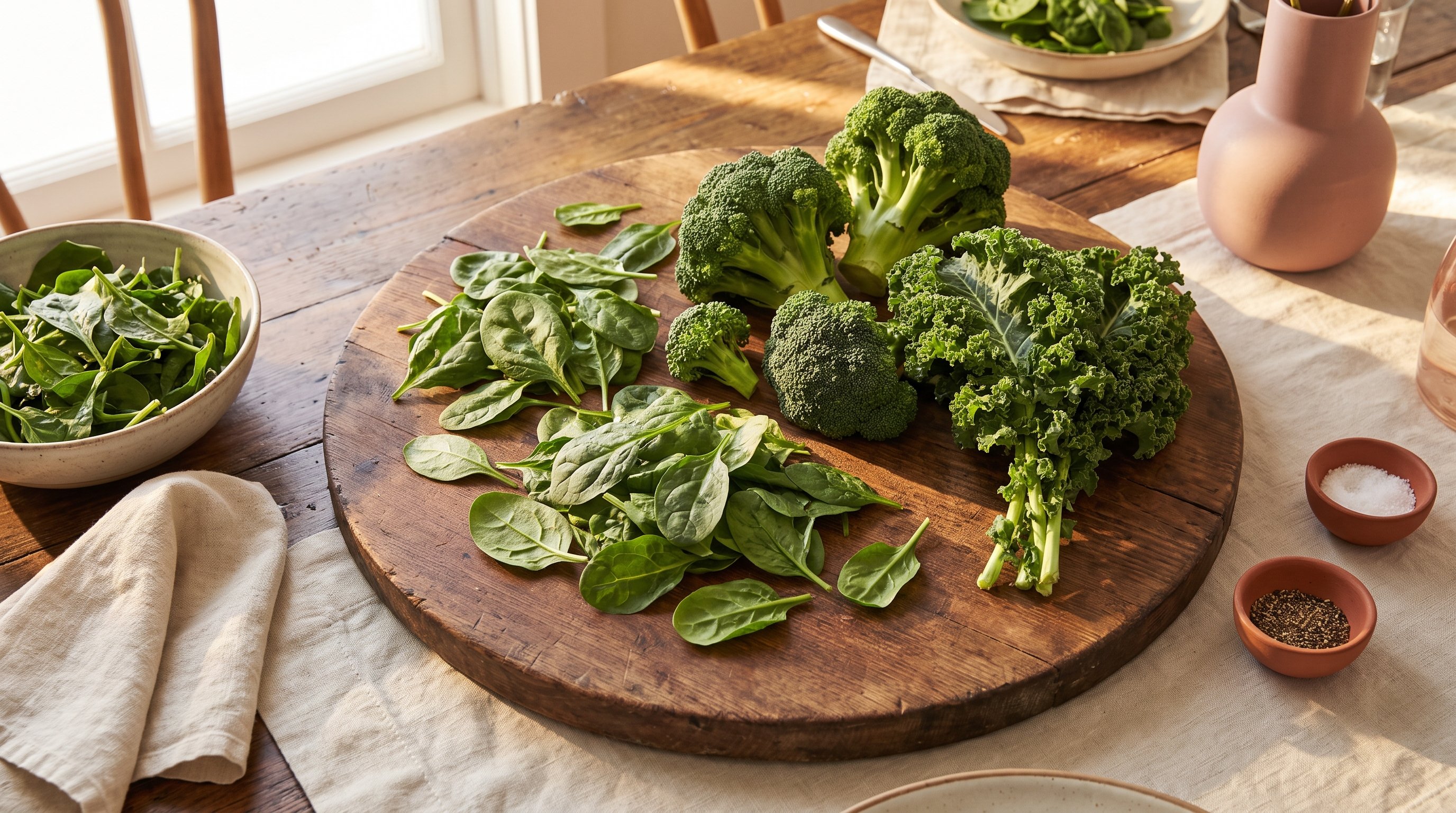
| Fibre | Vegetables and wholegrains daily | Beans, oats, leafy greens |
| Calcium | Two to three servings daily | Dairy, tofu, fortified plant milk |
| Water | Steady intake through the day | Water, herbal tea, soup |
You don't need to weigh anything to get close to these targets - spreading protein and fibre across three meals instead of loading them into one does most of the work.
Small Food Swaps Beat a Full Diet Overhaul
There are two routes here: rebuild your entire diet from scratch, or swap a few foods inside meals you already eat.
The overhaul route sounds thorough, but it asks you to relearn shopping, cooking and eating out all at once, and that's a lot to hold onto on a Tuesday.

Swapping white rice for a wholegrain, or adding a boiled egg to toast, keeps the meal familiar while quietly nudging protein and fibre up.
Swaps stick because they don't ask you to think from zero every time you're hungry - the structure of your usual meal stays, only the contents shift.
Making These Habits Work on an Ordinary Week
Knowing what to eat is one thing - remembering it while juggling work, family and everything else is another.
A meal plan built around food you already like removes the daily decision-making, so protein, fibre and calcium land in your meals without you having to calculate anything.
Harmony Diet lays out meals this way from the start, which means the thinking is already done before you open the fridge.
Adjusting These Habits to Where You Are Now
If You're Just Starting Out
Pick one meal a day to adjust first, like adding yoghurt to breakfast, rather than trying to overhaul three meals at once.
If Your Days Are Packed
Lean on foods that need no prep - tinned beans, pre-washed greens and tinned fish still count toward your protein and fibre totals.
If You're Managing Joint or Bone Concerns
Calcium-rich foods paired with a source of vitamin D, like fortified milk or a short walk outdoors, make the most sense to prioritise first.
If You're Cooking for a Household
Build the base meal around what everyone eats, then add your protein or fibre boost separately - a side of lentils or a scoop of seeds works without anyone noticing a change.
When These Eating Habits Start to Feel Normal
Nobody feels like an expert in week one, and that's fine - habits around food take a while to stop feeling deliberate.
The point where people tend to quit is somewhere around the third or fourth week, right after the initial motivation fades and before the habit has fully settled in.
Sticking with simple swaps through that stretch, rather than switching to a new plan entirely, is usually what gets people through it.
Letting Harmony Diet Shape Your Menopause Meals
Deciding what counts as a good meal every single day is tiring, and tired decisions tend to default to whatever's easiest, which isn't always what supports you best.
Harmony Diet builds meal plans around your age and goals, so protein, fibre and calcium are already worked into the plan rather than something you have to track separately.
It also brings together step counts, water intake and weight in one place, alongside light workouts and nutrition guides, so the food side doesn't sit apart from everything else you're doing.
Manage Weight with Personalized Harmony Diet
Make it simple with a plan made for you
Carrying These Habits Into Your Next Shop
The food side of menopause doesn't need to be complicated - protein at meals, fibre from plants, calcium a couple of times a day, and the rest follows.
Start with your next grocery list: add Greek yoghurt, a tin of beans and a bag of leafy greens, and build from there.
Harmony Diet can take the planning off your plate from here, turning these habits into meals that are already mapped out for you.
FAQ
Food choices alone won't target weight in any specific place, but steady protein and fibre help meals feel satisfying, which supports a sensible overall intake. There's no food that works alone - it's the full pattern across the day that matters.
No - wholegrains and dairy both fit comfortably into the protein, fibre and calcium approach described here. Cutting entire food groups isn't necessary unless a separate health reason applies to you.
Tinned, frozen and pre-prepared foods can still deliver protein, fibre and calcium - a tin of beans or a bag of frozen greens counts just as much as fresh. The goal is what ends up on the plate, not how much effort went into it.
Pick a small number of swaps you can repeat without thinking, rather than a long list of rules to remember. Harmony Diet keeps the plan visible day to day, which makes it easier to keep going once the initial motivation fades.
Share this post