Protein for Women Over 40: A Practical Plan to Maintain Muscle
By:Author:Harmony Diet Editorial
Updated on:October 17, 2026

- Does Eating More Protein Actually Help After 40?
- Protein Shakes Versus Whole-Food Meals: Which Wins
- Why Steady Protein Swaps Beat a Full Diet Rebuild
- Adjusting Protein Habits for Different Women Over 40
- Making Protein Targets Work Inside a Busy Week
- No, Protein Alone Will Not Reshape Your Body
- Letting Harmony Diet Handle the Daily Protein Math
- Turning Protein Awareness Into a Daily Habit
Protein for women over 40 matters more than it did at 25, because muscle naturally becomes harder to hold onto with age and protein is the raw material your body uses to maintain it. This isn't about chasing a number for its own sake - it's about giving your body what it needs to keep muscle, support metabolism and feel steady through the day.
The mechanism is simple. Muscle tissue is in constant turnover - broken down and rebuilt - and without enough protein coming in, the balance tips toward loss rather than maintenance.
This guide covers what protein actually does for women over 40, how much realistically belongs on a plate, the tradeoffs of different ways to hit that target, who needs to adjust the approach, and how to fit it into a week that's already full.
Does Eating More Protein Actually Help After 40?
Yes, within reason - more protein gives your body more of the building blocks it needs to maintain muscle, especially when paired with some resistance-type movement.
The arithmetic is straightforward. If a woman weighing 70kg aims for roughly 1.2 to 1.6 grams of protein per kilogram of bodyweight, that works out to between 84 and 112 grams a day.
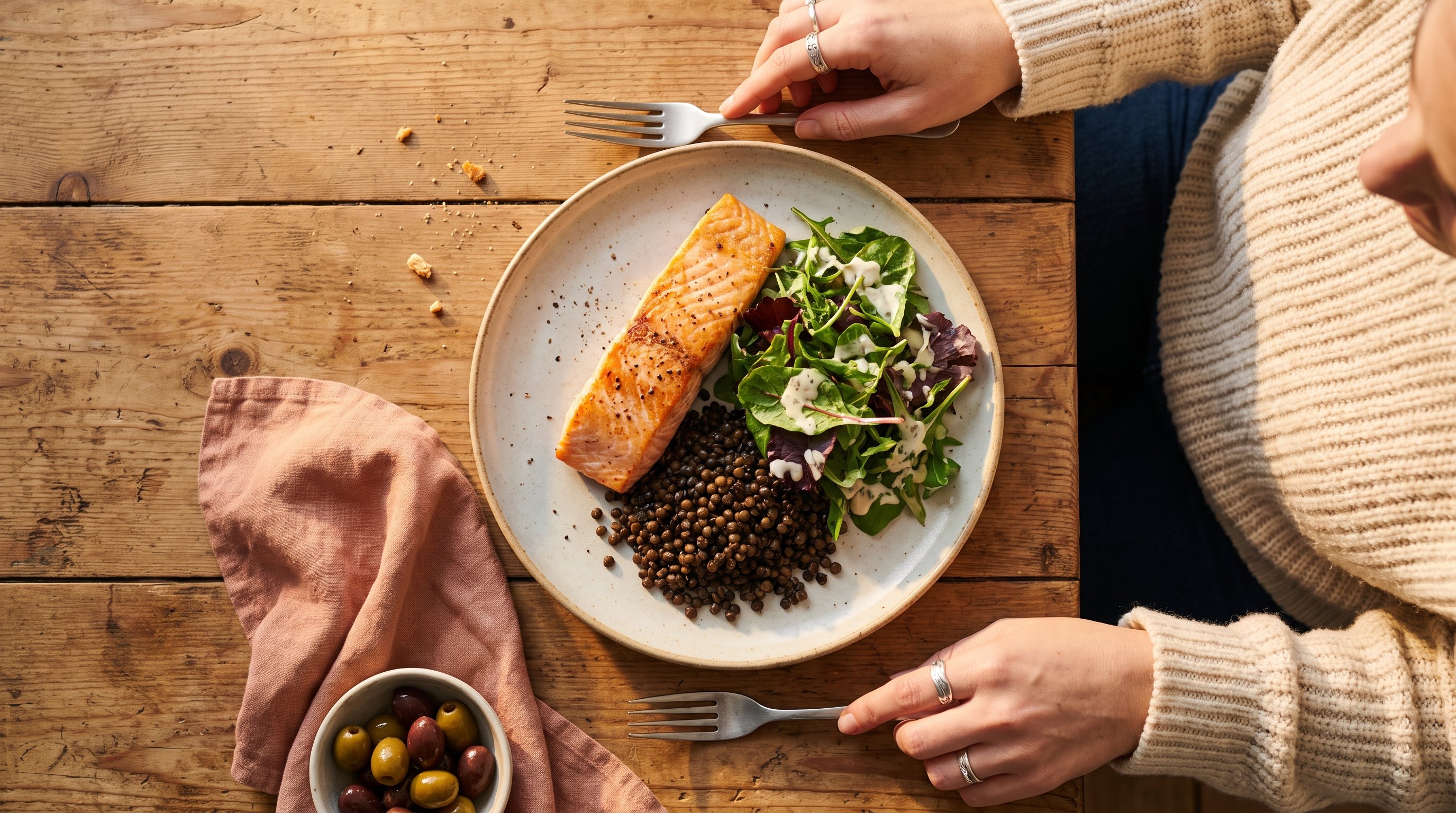
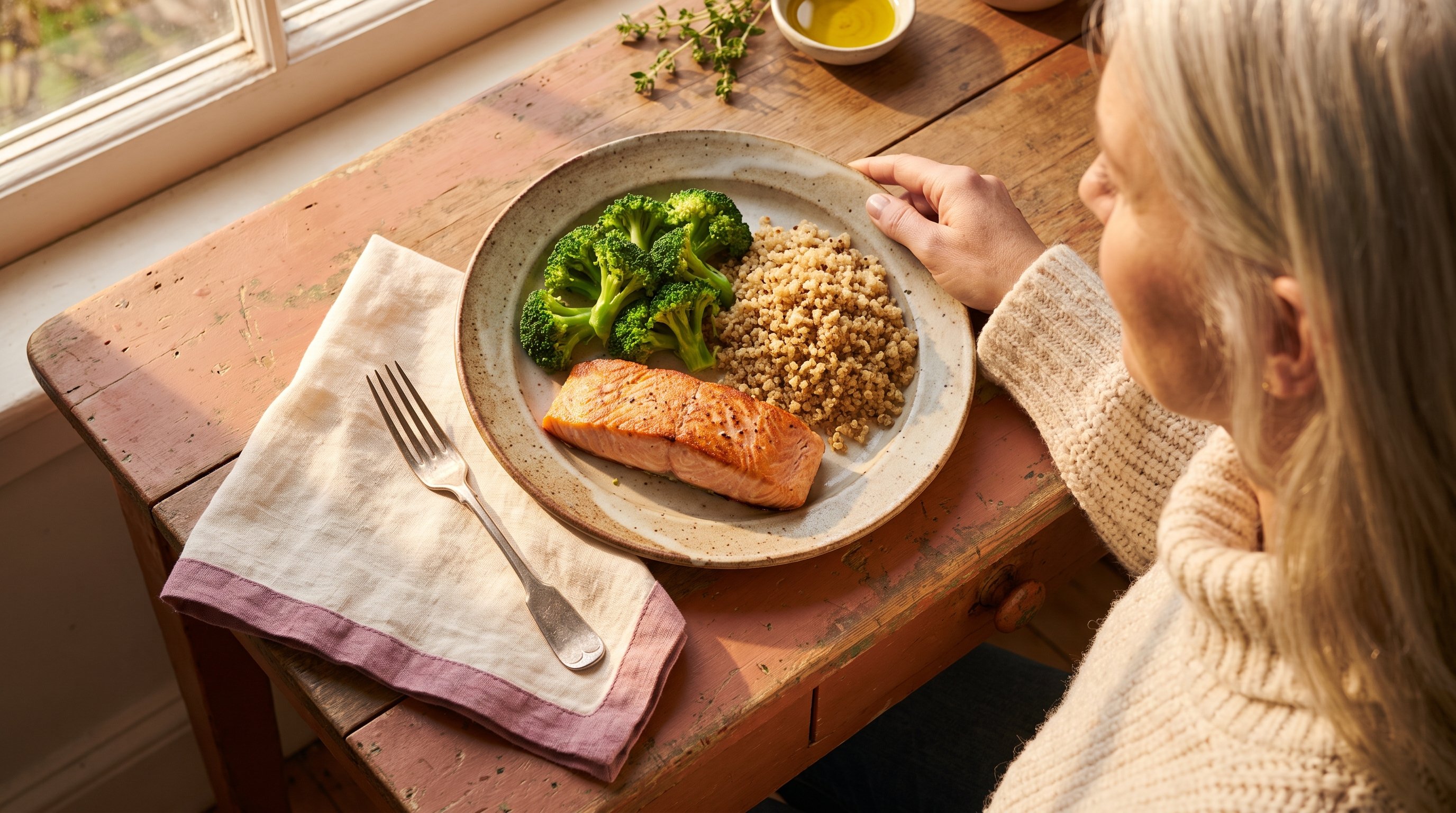
Spread across three meals, that's roughly 28 to 37 grams per meal - about the amount in a palm-sized portion of chicken, fish, tofu or a couple of eggs with a side of yoghurt or legumes.
No single food or supplement changes this equation. It's the daily total that counts, built meal by meal, day after day.
Protein Shakes Versus Whole-Food Meals: Which Wins
Both can get you to your protein target, but they solve different problems and most women end up using a mix of the two.
| Option | Protein Per Serving | Effort Involved |
|---|---|---|
| Chicken breast | About 31g per 100g | Needs cooking |
| Greek yoghurt | About 10g per 100g | Ready to eat |
| Protein shake | 20-30g per scoop | Mix and go |
| Lentils | About 9g per 100g cooked | Batch cook ahead |
| Eggs | About 6g per egg | Quick to prepare |
Whole foods bring fibre, vitamins and minerals along with the protein, which matters for overall health over time.
Shakes are useful when time is tight or appetite is low, but they work best as a top-up rather than a replacement for every meal.
Why Steady Protein Swaps Beat a Full Diet Rebuild
Overhauling every meal to hit a protein target sounds thorough, but it rarely survives contact with a real week - work, family and fatigue all get in the way.
Small swaps stick because they ask less of you. Swapping a sugary breakfast for eggs or Greek yoghurt, or adding a scoop of cottage cheese to lunch, is a one-minute decision rather than a project.

Over a month, those small repeated swaps add up to the same protein total a stricter plan would demand, without the burnout that comes from rebuilding every recipe you own.
Consistency beats intensity here. A target you can hit most days beats a perfect plan you abandon after a week.
Adjusting Protein Habits for Different Women Over 40
If You're Just Starting to Pay Attention to Protein
Start by adding one protein source to your usual breakfast - an egg, some yoghurt or a spoon of nut butter - before worrying about the rest of the day.
If You're Juggling Work and Family
Lean on foods that need no prep - tinned fish, pre-cooked chicken, yoghurt pots - so protein doesn't depend on having time to cook.
If You're Further Into Menopause
Spreading protein evenly across three meals, rather than loading it all at dinner, gives your body a steadier supply through the day.
If You're Also Trying to Manage Weight
Protein tends to keep you fuller for longer, so pairing it with vegetables and a modest portion of carbohydrate can help you stay within a comfortable calorie range without feeling deprived.
Making Protein Targets Work Inside a Busy Week
Hitting a daily protein target doesn't require a kitchen overhaul - it requires a short list of go-to meals you can repeat without thinking too hard.
Batch-cooking a protein source at the weekend - a tray of chicken thighs, a pot of lentils, a dozen boiled eggs - means at least one meal a day is already sorted.
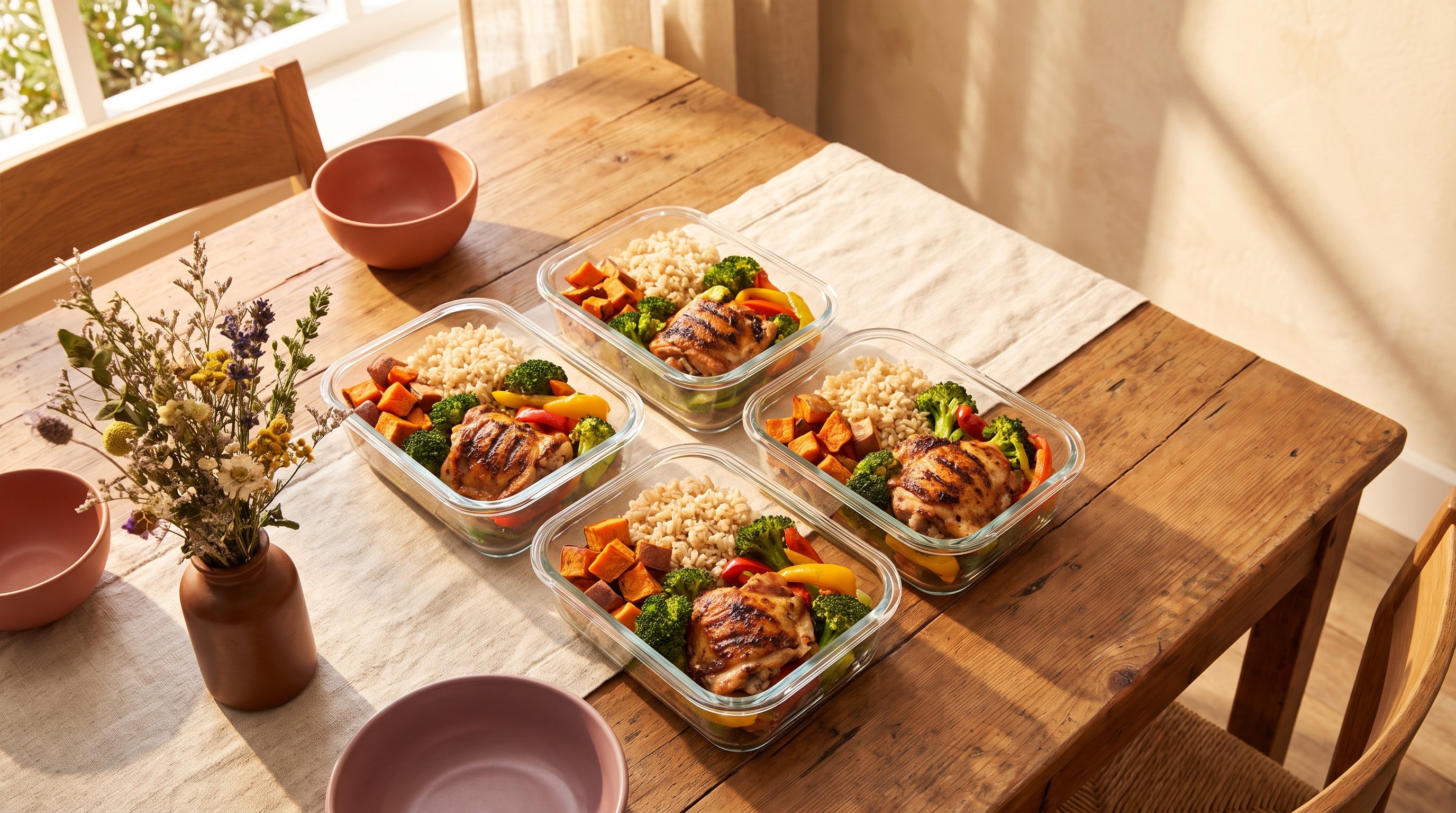
This is where a meal plan built around food you already like makes a real difference, because Harmony Diet maps out protein-forward meals for you instead of leaving you to calculate grams on your own.
Keeping water intake, weight and daily habits in one place also makes it easier to notice when protein has quietly slipped for a few days, so you can correct course before it becomes a pattern.
No, Protein Alone Will Not Reshape Your Body
It would be convenient if eating more protein melted fat from one area or rebuilt muscle overnight, but that isn't how any of this works.
The body doesn't let you choose where it stores or loses weight, and no food - protein included - targets a specific area.
What protein actually does is give your body the material it needs to maintain muscle when combined with movement, and help you feel satisfied on a reasonable number of calories.
That's a quieter, slower kind of progress than a quick fix promises, but it's the kind that holds up over time.
Letting Harmony Diet Handle the Daily Protein Math
Working out protein grams for every meal gets tiring fast, which is exactly the kind of daily friction that causes good intentions to fade.
Harmony Diet builds meal plans around your age and goals, pulling from over 1,000 menopause-aware recipes so protein-rich meals are already mapped out rather than something you calculate from scratch.
Alongside the meal plans, the app includes light workouts and yoga sessions that pair well with higher protein intake, plus trackers for weight, water and steps so you can see whether your habits are actually adding up over the weeks.

Manage Weight with Personalized Harmony Diet
Make it simple with a plan made for you
Turning Protein Awareness Into a Daily Habit
The most useful step is also the simplest one - pick one meal today and add a proper protein source to it, whether that's eggs at breakfast or yoghurt as a snack.
Repeat that same small decision tomorrow, and the day after, and it stops being a decision at all - it becomes how you eat. Harmony Diet can take some of the daily thinking off your plate by laying out protein-forward meals and letting you track how consistent you've actually been.
FAQ
A rough guide is 1.2 to 1.6 grams per kilogram of bodyweight a day, which for a 70kg woman works out to roughly 84 to 112 grams. Spreading that across three meals keeps each portion manageable.
No - building visible muscle mass takes deliberate resistance training over a long stretch of time, and diet alone won't cause it. Extra protein without that training simply supports the muscle you already have.
You don't need to count grams forever - focusing on adding one protein source to each meal gets most people close enough. Harmony Diet's meal plans do the calculating in the background so you're not left guessing.
It usually slips when meals become repetitive or inconvenient, not from a lack of willpower. Keeping a short rotation of easy, protein-rich meals - and batch-cooking when you can - tends to hold up far longer than relying on motivation alone.
Share this post