Foods Rich in Vitamin K: Whole-Food Swaps That Deliver Results
By:Author:Harmony Diet Editorial
Updated on:October 17, 2026
- Do Vitamin K Foods Actually Make a Difference?
- Leafy Greens or Supplements: Which One Covers You Better
- Why Everyday Greens Beat Strict Supplement Routines
- Adjusting Vitamin K Intake for Different Routines
- Making Vitamin K Foods Work in a Full Week
- No, Greens Cannot Target Where Your Body Stores Fat
- Simplifying Your Vitamin K Choices With Meal Planning
- Turning Vitamin K Foods Into a Default Habit
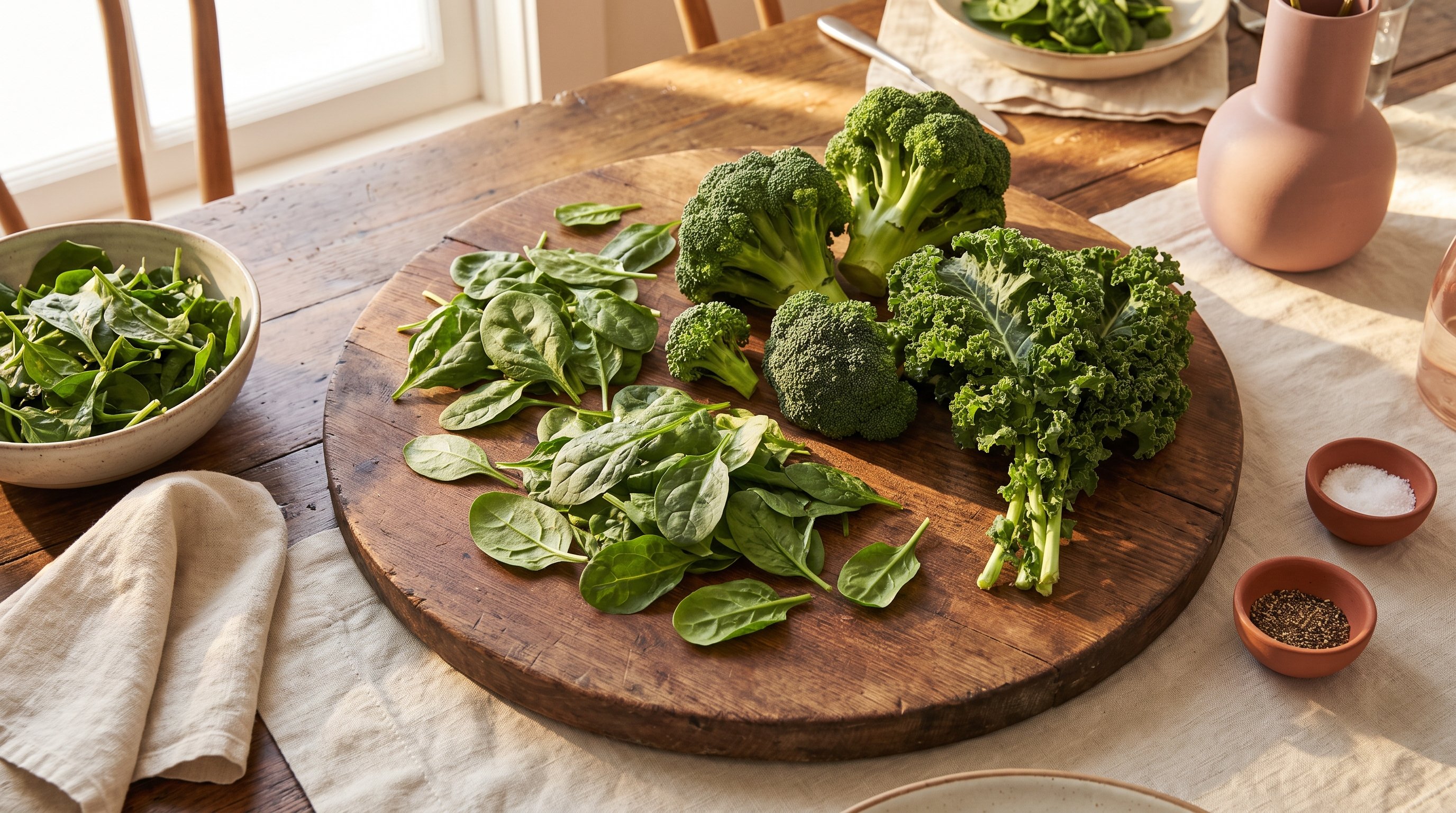
Foods rich in vitamin K are mostly green: kale, spinach, broccoli, and a handful of oils and fermented foods round out the list. The reason they matter comes down to what vitamin K actually does inside the body, not some magic attached to the colour green.
Vitamin K is involved in how the body manages calcium and how blood clotting works, which means a steady supply through food matters more than any single big serving.
This guide covers which foods carry the most vitamin K, how they compare, who needs to think about intake differently, and how to fold them into meals you already cook.
Do Vitamin K Foods Actually Make a Difference?
The honest answer is yes, in the sense that consistent intake supports normal body processes, but no single meal changes anything overnight.
Vitamin K comes in a couple of forms. Leafy greens, broccoli, and some vegetable oils provide one form, while fermented foods provide another, and both get used by the body in different tissues.
Here's the arithmetic that matters: a cup of cooked kale or spinach, eaten most days, adds up to a far steadier supply than one big salad once a week followed by six days of nothing green.
Spread across a week, that's roughly seven small opportunities to hit a target instead of one large attempt that's easy to skip when life gets busy.
Leafy Greens or Supplements: Which One Covers You Better
Plenty of people weigh up whether to just take a supplement instead of thinking about food, so it helps to see the actual options side by side.
| Food Or Option | Format | Effort Required | What Else You Get |
|---|---|---|---|
| Kale cooked | Whole food | Low, quick to cook | Fibre, other nutrients |
| Spinach raw | Whole food | Very low, no cooking | Fibre, folate |
| Broccoli steamed | Whole food | Low, short steam time | Fibre, vitamin C |
| Fermented soy foods | Whole food | Low, ready to eat | Protein, probiotics |
| Vitamin K capsule | Supplement | Low, one swallow | No fibre or extras |
Whole foods win on one point a capsule cannot match: they bring fibre, other vitamins, and minerals along for the ride, all from the same forkful.
Why Everyday Greens Beat Strict Supplement Routines
A supplement routine only works if you remember it every single day, forever, with no gaps.
Food swaps work differently. Once spinach in your morning eggs or leafy greens in your lunch becomes normal, you stop having to think about it at all.
That's the real adherence argument: a habit baked into meals you already eat beats a pill bottle you have to remember to open, because one requires willpower and the other just requires lunch.
Vegetable oils used for cooking and fermented foods added to a regular rotation work the same way, quietly doing their job without demanding extra attention.
Adjusting Vitamin K Intake for Different Routines
If You're Cooking From Scratch Most Nights
Add a handful of chopped kale or spinach to whatever you're already simmering, since both wilt down fast and barely change the flavour of soups, stews, or stir-fries.
If You're Short on Time
Pre-washed bagged greens and frozen chopped broccoli cut prep to almost nothing, and both still carry the same vitamin K as the fresh versions you'd otherwise chop by hand.

If You're Managing Menopause-Related Changes
Vitamin K's role in how the body handles calcium makes leafy greens worth keeping in regular rotation alongside the other nutrients already on your radar during this stage of life.
If You're Cooking for a Household That Avoids Greens
Fermented foods and cooking oils rich in vitamin K offer a quieter route in, since they can be used in dressings or marinades without anyone noticing a pile of greens on the plate.
Making Vitamin K Foods Work in a Full Week
Nobody needs a separate shopping trip just for vitamin K. The trick is attaching greens to meals that already happen, not inventing new ones.

A spinach handful in a smoothie, kale stirred into pasta sauce, or broccoli roasted alongside whatever protein is already in the oven all count.
A meal plan built around food you already like makes this far easier to sustain than a list of rules to memorise, and meal planning services lean on exactly that kind of practical substitution rather than asking you to overhaul how you eat.
Keeping steps, water, and weight in one place also helps you notice patterns, like which weeks you actually ate greens daily and which weeks slipped.
No, Greens Cannot Target Where Your Body Stores Fat
It would be convenient if eating more kale shrank a specific area of the body, but that is not how any food works, vitamin K included.
The body decides where it stores and releases fat based on factors nobody can direct with a vegetable choice, no matter how green or nutrient-dense it is.
What foods rich in vitamin K actually offer is support for normal calcium handling and blood clotting, nothing more dramatic and nothing shaped like a promise.
The real value of eating this way sits in consistency over weeks and months, not in any single dramatic result tied to one food group.
Simplifying Your Vitamin K Choices With Meal Planning
Deciding what to cook every night is the part that wears people down, not the actual eating of greens once they're on the plate.
A meal planning service takes that daily decision off your plate, quite literally, by building tailored-for-you meal plans that already work vitamin K rich vegetables into recipes designed around your goals.
With Harmony Diet, instead of googling which greens to buy, you get a recipe list already stocked with kale, spinach, and broccoli dishes, plus progress tracking so you can see how often these foods actually make it into your week.
Manage Weight with Personalized Harmony Diet
Make it simple with a plan made for you
Turning Vitamin K Foods Into a Default Habit
Pick one meal this week and add a handful of greens to it, nothing more ambitious than that to start.
Once that single swap feels automatic, add a second one, and let the habit build from there rather than trying to fix every meal at once. A meal planning service can carry the planning side while you focus on just showing up to the table.
FAQ
Needs vary by age and individual health circumstances, so there's no single number that fits everyone. Eating leafy greens or other vitamin K sources most days is a more useful target than chasing an exact figure.
A supplement only covers vitamin K, while whole foods bring fibre and other nutrients along with it. Food-based habits also tend to stick better because they attach to meals you're already eating.
Broccoli, fermented foods, and certain cooking oils all carry vitamin K without needing a salad bowl. Blending spinach into a smoothie or sauce is another way around a texture or taste you'd rather avoid.
Most people start strong with a big grocery haul, then run out of greens and never restock. A structured meal plan builds these foods into recipes on repeat, so restocking becomes part of the routine instead of an afterthought.
Share this post