Tai Chi for Seniors: A Gentle Routine for Balance and Joints
By:Author:Harmony Diet Editorial
Updated on:October 17, 2026

- Starting a Tai Chi Practice From Scratch
- How Much Tai Chi Practice Actually Helps
- Working Tai Chi Into an Already Full Week
- A Four-Week Way Into Tai Chi for Seniors
- When Tai Chi Routines Tend to Fall Away
- Mistakes That Quietly Undo a Tai Chi Habit
- Building Tai Chi Into Your Harmony Diet Routine
- Making Tai Chi a Lasting Part of Your Week
Tai chi for seniors works because it trains balance and steadiness through slow, controlled shifts of weight, not through strain. The movements ask your joints to move through a full range without impact, which is why people with stiff knees or sensitive hips can often keep going when harder workouts get shelved.
The mechanism is simple: standing on one leg, turning slowly, shifting weight from heel to toe. Each of those actions challenges your balance system a little, and repeating them regularly gives that system practice it would not otherwise get in a normal day.
This guide covers how to start, how often to practise, a four-week way in, where people tend to lose the habit, and how to avoid the mistakes that end most attempts early.
Starting a Tai Chi Practice From Scratch
You do not need special equipment or a studio to begin. A clear patch of floor, supportive shoes or bare feet, and a few spare minutes are enough to get going.
How to Begin
- Clear a small space - about two metres square, away from furniture edges
- Stand with feet hip-width apart - knees soft, weight even on both feet
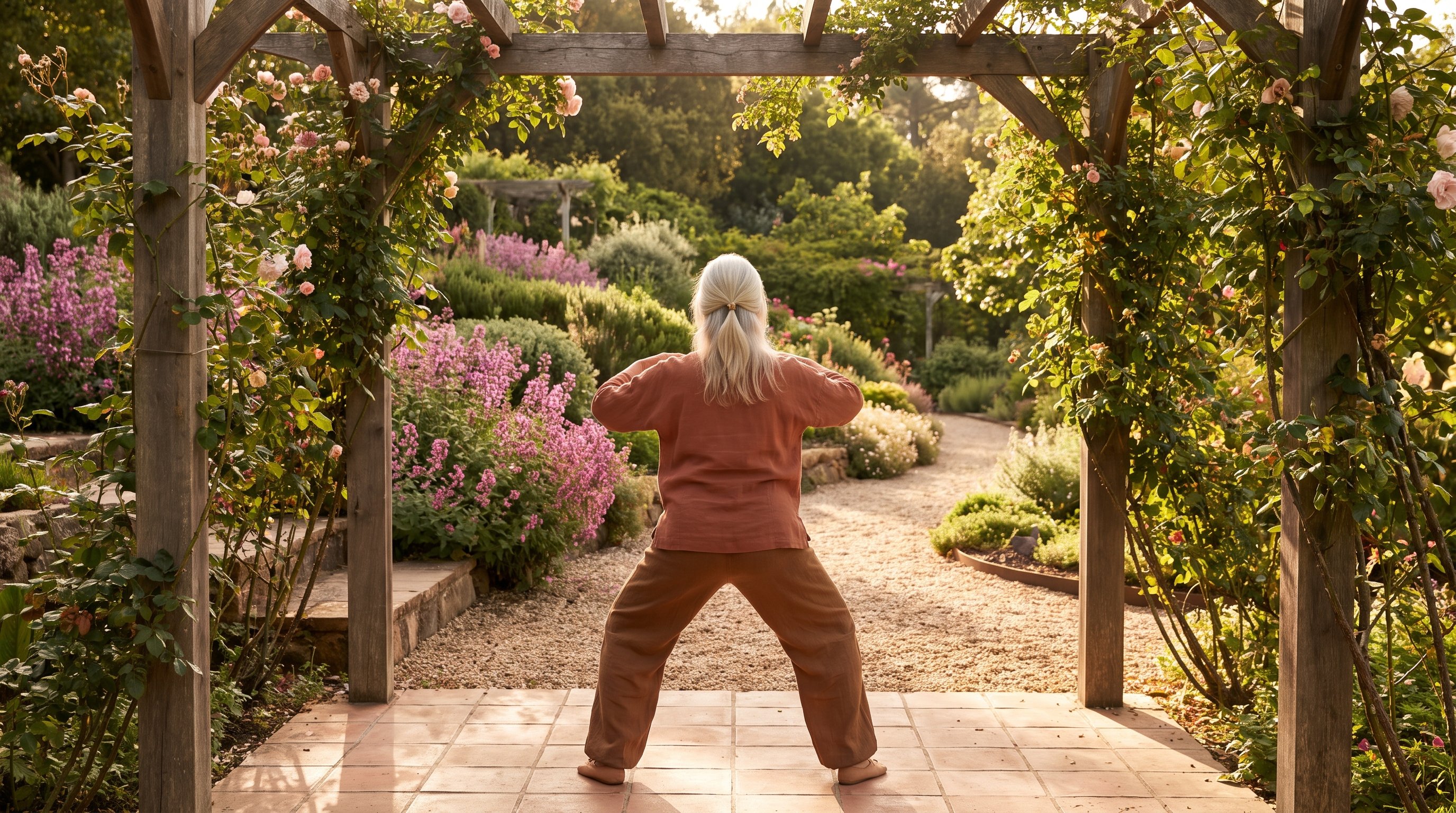
- Practise a slow weight shift - move weight from one foot to the other over several seconds
- Add slow arm movements - raise and lower arms in time with your breath
- Turn slowly at the waist - keep feet planted, let your arms follow
- Hold a brief one-leg stance - near a wall or chair for support
- Finish standing still - a minute of quiet standing to notice how your balance feels
Each of these steps can be done in under ten minutes once you know the order, which makes the whole thing easy to repeat daily rather than something you have to plan around.
How Much Tai Chi Practice Actually Helps
There is no single correct dose, but short, frequent sessions tend to build steadiness faster than one long session a week.
Finding a Starting Frequency
Most people do better starting small and building up than trying a long session on day one and quitting by day three.
| Stage | Session Length | Frequency |
|---|---|---|
| Just starting | 5 to 10 minutes | Daily |
| A few weeks in | 10 to 15 minutes | 5 to 6 days a week |
| Comfortable | 15 to 20 minutes | 4 to 5 days a week |
| Established routine | 20 to 30 minutes | 3 to 4 days a week |
Use this as a rough map, not a rulebook. If a day feels off, a short session still counts for more than skipping entirely.
Working Tai Chi Into an Already Full Week
The easiest way to keep tai chi going is to attach it to something you already do, like right after brushing your teeth or just before switching the kettle on.
Doing it at the same point in the day removes the decision-making, which is often the part that causes a routine to slip.

If tracking the habit helps you stay consistent, keeping a simple log of which days you practised can make the pattern visible, which is part of what the progress tracking inside Harmony Diet is built for alongside its wider library of light exercises.
You do not need a long block of free time. Ten quiet minutes before breakfast or after an evening walk is enough to keep the habit alive.
A Four-Week Way Into Tai Chi for Seniors
The order below matters more than hitting an exact number of minutes each day.
| Stage | What to Focus On |
|---|---|
| Week 1 | Standing posture and slow weight shifts |
| Week 2 | Add slow arm raises and waist turns |
| Week 3 | Link movements into a short flowing sequence |
| Week 4 | Add brief one-leg balance holds near support |
By the end of week four, the goal is not speed or complexity. It is a short sequence that feels familiar enough to repeat without thinking too hard about what comes next.
When Tai Chi Routines Tend to Fall Away
The first couple of weeks often feel slow because the movements are unfamiliar, and it is easy to wonder if anything is happening at all.
Be vague about when steadiness becomes noticeable, since it depends on how often you practise and where you started. What tends to hold true is that the people who keep a short daily habit going past the first few weeks are the ones who notice a difference in how confident they feel moving around the house.
Drop-off usually happens around the point where the new-habit excitement fades and the routine has to survive on its own. Having a simple cue, like doing it straight after a daily task, helps carry it through that stretch.
Mistakes That Quietly Undo a Tai Chi Habit
Rushing the Movements
Moving quickly defeats the point of tai chi, since the slow pace is what gives your balance system time to adjust. Slow everything down further than feels natural at first.
Practising Only When Motivated
Waiting to feel like it means most days get skipped. Attach the practice to a fixed moment in your day instead of relying on mood.
Skipping the Standing-Still Moments
The pauses between movements are not dead time, they are where your balance system actually registers the adjustment. Let those quiet seconds happen instead of rushing into the next step.
Ignoring Support When It's Needed
Trying to balance unaided too soon can make the one-leg holds wobbly and discouraging. Keep a wall or sturdy chair nearby until the stance feels steady on its own.
Expecting It to Replace All Other Movement
Tai chi builds balance and gentle joint mobility, but it is not a substitute for everything else your body needs through the week. Pairing it with other light activity, like walking or stretching, rounds out what tai chi alone does not cover.
Building Tai Chi Into Your Harmony Diet Routine
Tai chi works best as part of a wider pattern, not as an isolated five minutes squeezed in once and forgotten.
Harmony Diet brings together light exercises, including gentle balance and mobility work, alongside meal plans built around food you already like and trackers for steps, water and weight, so the whole week sits in one place instead of scattered across apps and notebooks.
For anyone navigating menopause alongside building new movement habits, Harmony Diet also includes nutrition guides and lifestyle challenges, which can make a slow-paced routine like tai chi feel like one piece of a bigger, steadier plan rather than something extra to manage on its own.

Manage Weight with Personalized Harmony Diet
Make it simple with a plan made for you
Making Tai Chi a Lasting Part of Your Week
Tai chi for seniors is not about mastering a long sequence. It is about showing up for a few slow, steady minutes often enough that your balance and joints get regular, gentle practice.
Pick one time of day, attach the practice to something you already do, and let the rest build from there. If you want the habit to sit alongside a wider plan for nutrition and movement, Harmony Diet is built to hold all of it in one place.
FAQ
The slow weight shifts and one-leg holds give your balance system regular practice it rarely gets during an ordinary day. Repeating that practice is the mechanism, not a quick fix or a one-off session.
Tai chi is not designed to raise your heart rate the way brisk walking does, and that is fine because its job is different. It trains control, posture and steadiness, which matter just as much for daily movement as cardio fitness does.
Practising near a wall or sturdy chair for support lowers the risk while you build confidence in the movements. Starting with shorter sessions and skipping any position that feels unstable is a reasonable way to ease in.
Harmony Diet's library of light exercises sits next to its meal plans and trackers, so a short tai chi session can slot into the same daily routine as everything else you are tracking. That makes it easier to keep going past the first few enthusiastic days.
Share this post