How to Meal Prep for the Week: A Four-Week Practical Plan
By:Author:Harmony Diet Editorial
Updated on:October 17, 2026
- Setting Up a Weekly Meal Prep Routine
- How Many Meals to Prep and How Often
- Making Meal Prep Fit a Real Week
- A Four-Week Meal Prep Starter Plan
- When Meal Prep Habits Usually Start to Slip
- Where Weekly Meal Prep Plans Fall Apart
- Letting Harmony Diet Simplify Weekly Meal Prep
- Keeping Your Meal Prep Routine Going Past Month One
Meal prepping for the week means cooking your proteins, grains and vegetables in batches once or twice a week, then combining them into meals as you go. It works because it removes the daily decision of what to eat, which is usually where good intentions fall apart.
The mechanism is simple: decision fatigue drops, convenience food stops winning by default, and portions become visible instead of guessed.
This guide covers the steps to start, how much to prep and how often, a four-week plan to ease into it, the point where most people quit, and the mistakes worth skipping entirely.
Setting Up a Weekly Meal Prep Routine
A workable routine follows a loop you can repeat without rethinking it every week.
Steps to Build Your Routine
- Pick one prep day - choose a day you consistently have 60-90 minutes free, such as Sunday afternoon.
- Plan five to seven meals - write down what you'll eat, not just what sounds good, using food you already have or can get easily.
- Shop from a list - buy only what the plan needs, which keeps the grocery bill and the fridge clutter down.
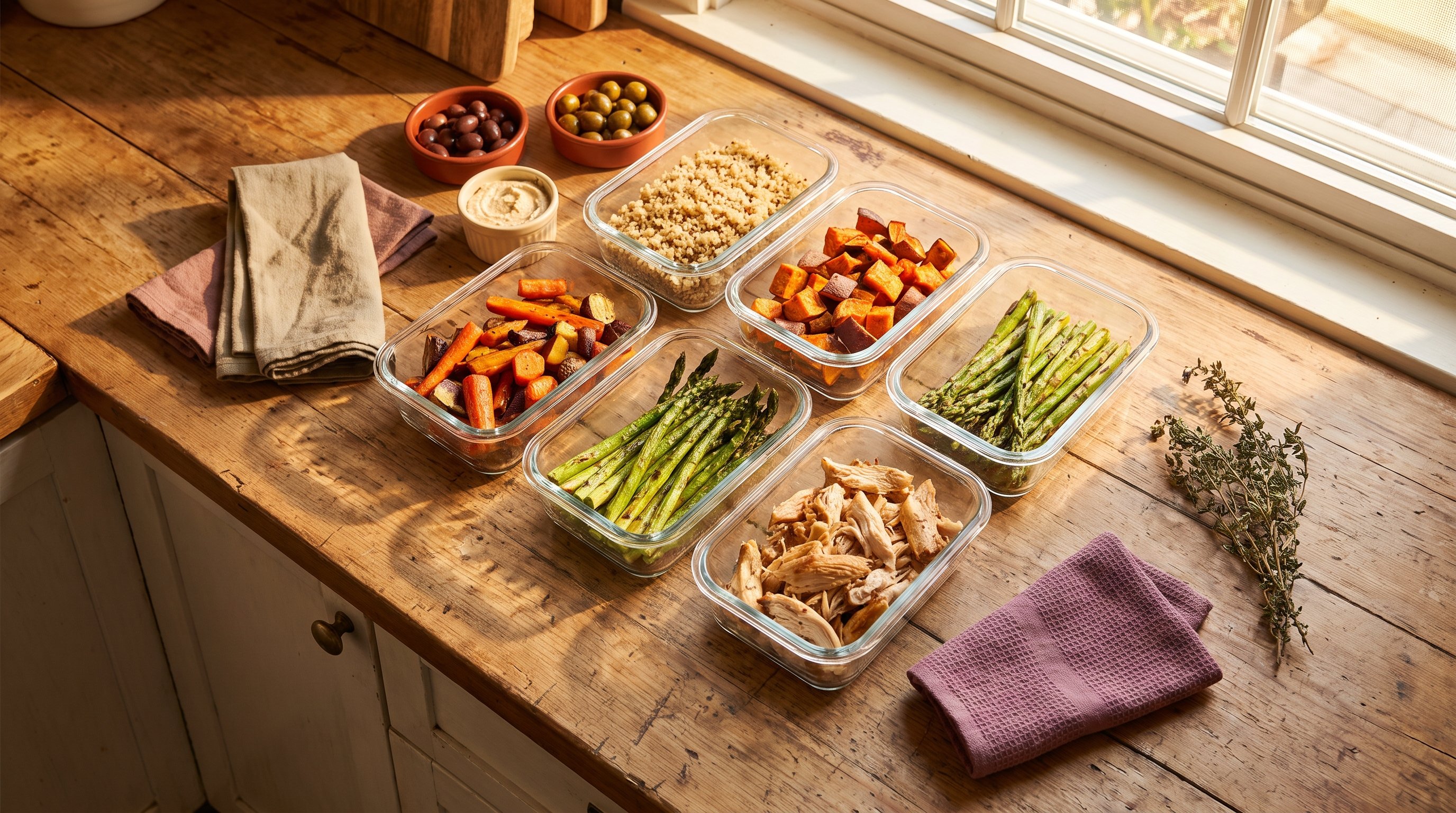
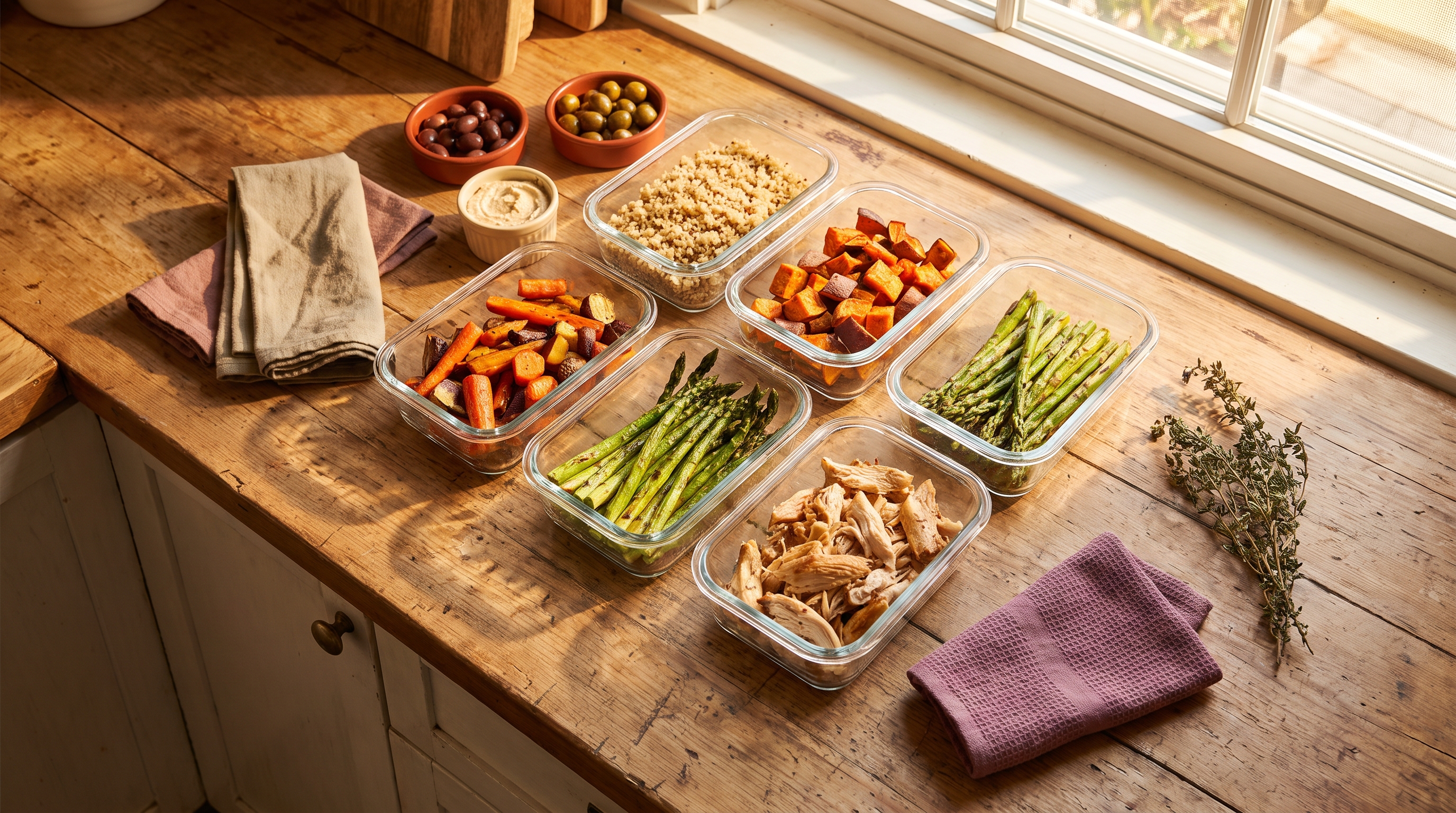
- Batch-cook the base items - cook proteins, grains and roasted vegetables in large trays or pots at the same time.
- Portion into containers - divide food into single meal containers while it's still warm, so there's no extra step later.
- Label and store - date each container and put the ones you'll eat last at the back of the fridge or in the freezer.
- Build in one flex meal - leave one slot unplanned for the week's inevitable curveball, so the whole system doesn't collapse over one missed day.
How Many Meals to Prep and How Often
There's no single right number, but a rough structure helps you avoid prepping too much or too little.
Matching Prep Volume to Your Week
Most people do best prepping in batches that cover three to five days, then topping up midweek rather than trying to cook everything for seven days at once.
| Goal | Meals to Prep | Frequency |
|---|---|---|
| Just starting out | 5 lunches | Once a week |
| Full weekday coverage | 10 meals | Once a week |
| Busy, unpredictable week | 3-4 meals | Twice a week |
| Family of two or more | 14-20 meals | Twice a week |
Smaller, more frequent batches tend to keep food fresher and reduce the chance you get bored of eating the same thing on day five.
Making Meal Prep Fit a Real Week
The plan only works if it survives contact with an actual week - late meetings, tired evenings, plans that change.
Keep the first few weeks simple: repeat two or three base meals rather than chasing variety, and accept that some containers will get eaten a day later than planned.

A meal plan built around food you already like makes this far easier to sustain, because you're not fighting your own preferences every day.
Harmony Diet gives you a tailored-for-you meal plan alongside its library of menopause diet recipes, so the prep list is built around meals you'd choose anyway, not generic diet food.
A Four-Week Meal Prep Starter Plan
Rather than trying to perfect the system in week one, build it up in stages.
| Stage | Focus |
|---|---|
| Week 1 | Prep one meal type, like lunches |
| Week 2 | Add breakfasts or snacks to the routine |
| Week 3 | Prep dinners too, using the same base ingredients |
| Week 4 | Refine portions and swap in new recipes |
The order matters more than hitting a specific number of containers - get one meal locked in before adding the next, and the habit holds.
When Meal Prep Habits Usually Start to Slip
The first week or two usually feels easy, mostly because the novelty is doing the work.
The harder stretch tends to come once the week stops being new and starts being routine - that's when a missed shopping trip or a busy week can knock the whole system off course.
Staying vague about exactly when results show up is the honest approach - what matters more is whether the routine is still standing a month in, not how fast it worked.
Where Weekly Meal Prep Plans Fall Apart
Prepping Too Many Different Recipes at Once
Five different dishes means five different shopping lists and five different cooking methods. Stick to two or three base recipes until the routine feels automatic, then add variety.
Skipping the Shopping List
Shopping from memory leads to missing ingredients and wasted trips back to the store. Write the list from the actual meals you planned, not from habit.

No Flex Meal in the Plan
A week with zero room for change breaks the first time plans shift. Build in one unplanned meal so a late night doesn't undo the whole week.
Storing Everything the Same Way
Food prepped for day five often tastes worse than food prepped for day one if it's not stored properly. Freeze what you won't eat within three to four days instead of leaving it all in the fridge.
Treating Prep Day As Optional
Skipping prep day once usually means skipping it twice. Protect the time slot the same way you'd protect any other weekly commitment.
Letting Harmony Diet Simplify Weekly Meal Prep
Planning meals from scratch every week is the part that burns people out, not the cooking itself.
Harmony Diet removes that step with a tailored-for-you meal plan drawn from its 1,000+ menopause diet recipes, so prep day starts with a ready list instead of a blank page.
It also keeps steps, water and weight in one place, so the food side and the movement side of the week stay visible together instead of living in separate notebooks or apps.
Manage Weight with Personalized Harmony Diet
Make it simple with a plan made for you
Keeping Your Meal Prep Routine Going Past Month One
Pick one prep day this week and plan just three meals around it - that's enough to prove the system works before expanding it.
Harmony Diet can take the planning part off your plate with a tailored meal plan, leaving you with the easier job of cooking and portioning.
FAQ
Meal prepping doesn't cause weight loss on its own, but it makes it easier to stick to a plan because portions are set in advance and impulse choices drop. The result depends on what's in the containers, not the prepping itself.
It doesn't have to be - varying the sauce, spice mix or side dish across the same base ingredients keeps meals different without adding extra cooking time. Rotating two or three base recipes each week also prevents the sameness that puts people off.
A 60-90 minute session once a week is usually enough for five to ten meals, and even a 30-minute session covering just lunches is better than no prep at all. Smaller, more frequent sessions work fine if one long block doesn't fit the week.
This is the point most people quit, usually a few weeks in once the novelty wears off. Harmony Diet's progress tracking and lifestyle challenges are built to help keep the routine visible and worth returning to, even on the weeks it feels like a chore.
Share this post